/The project
Rubano · Padua
A former car workshop,
and what is inside it.
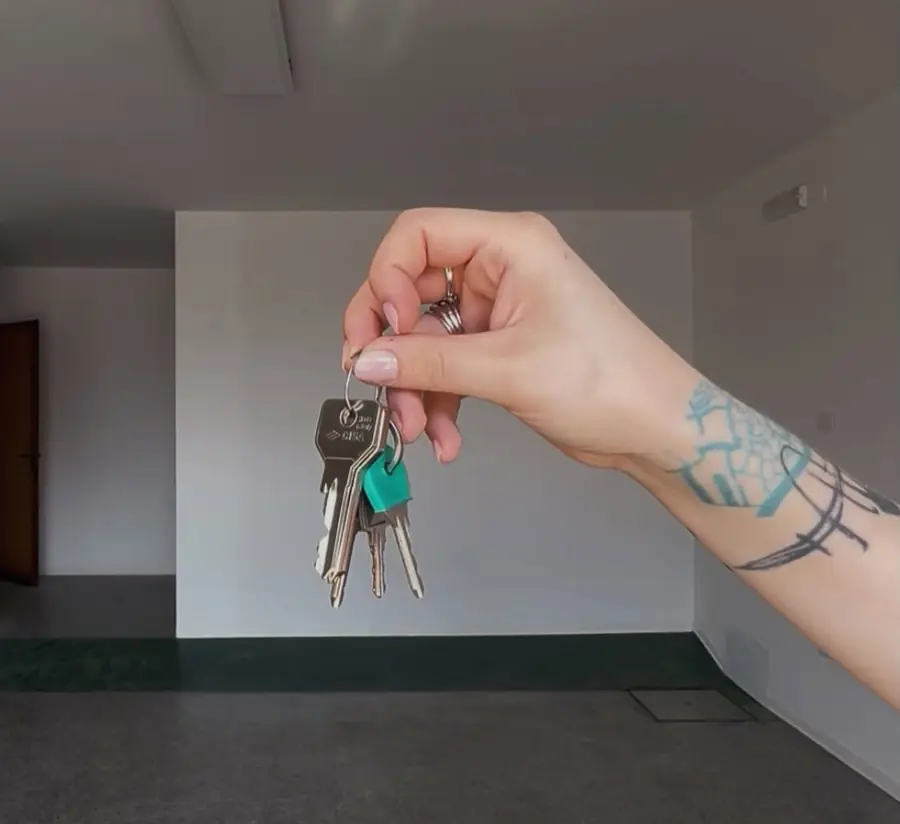
It began in Cecilia Maran’s garage, while she was studying printmaking at the Academy of Fine Arts in Venice and fellow students with no press of their own came to print with her. Today it is a workshop open to everyone, where historical printmaking techniques work alongside contemporary experiment.
/The space
/The premises
A place that already exists
The place, the equipment, the skills and the network are already here.
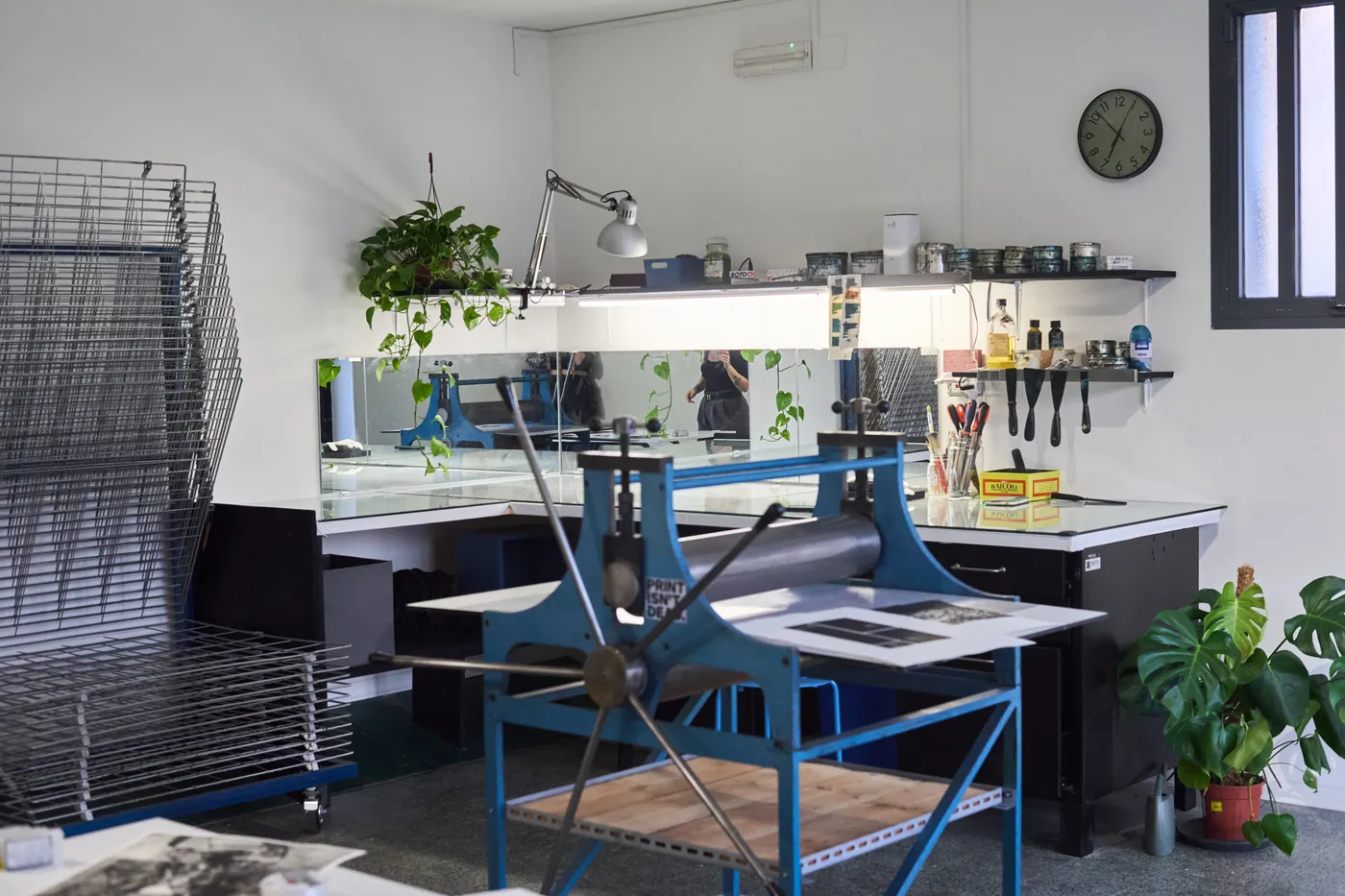
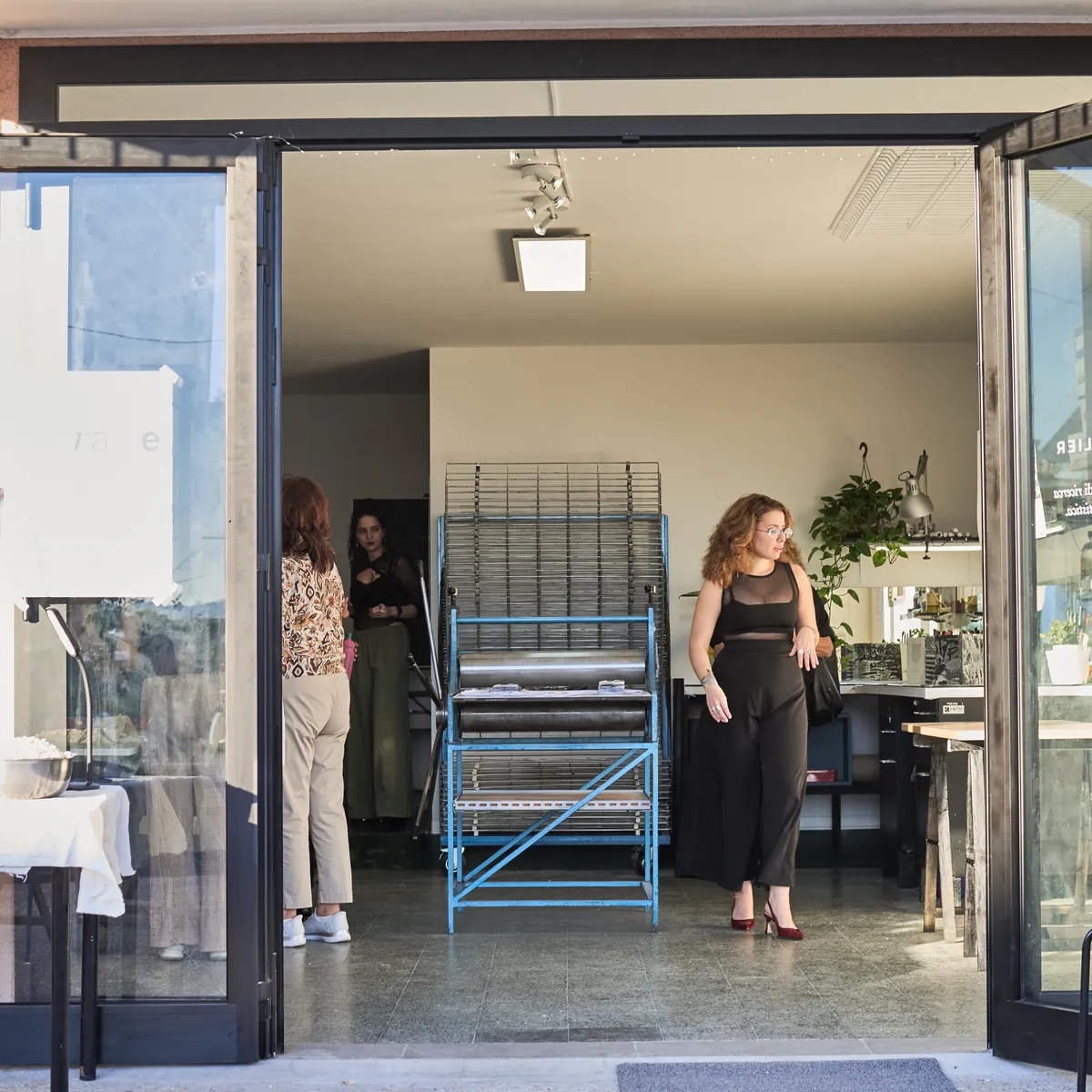
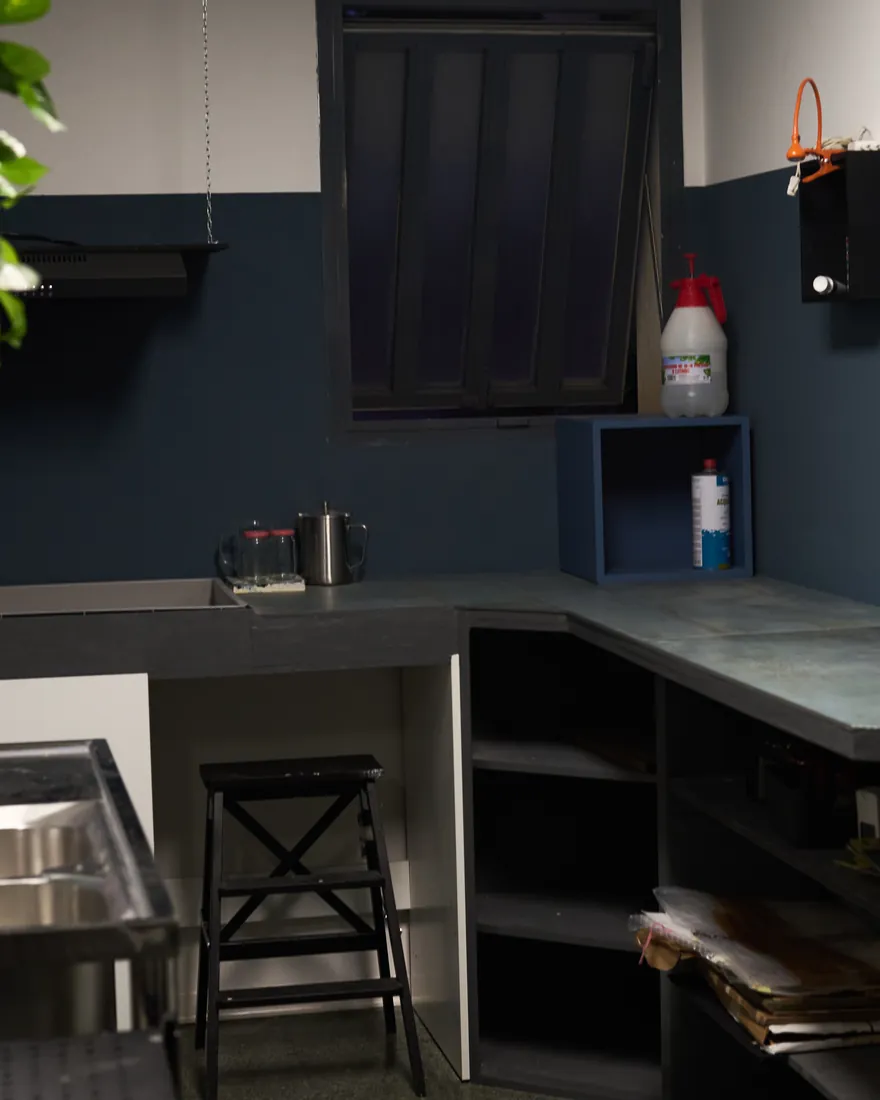
The former car workshop in Rubano has become a printmaking studio. Its rooms work as a studio, a room for workshops and an exhibition space, at times all at once. Five years of work before opening the doors, and now the time to make it a place that lasts.
/Equipment
What’s in the workshop
What you need to design a plate, incise it and print it. Anyone arriving with work already begun steps in where they need to.
01
Designing
The work begins before the metal. At the graphics workstation the outlines of the shapes are redrawn in vector, pages are laid out, colours are separated for the screens. Scans of plates and proofs pass through here too, when a project puts them back on the press.
02
Incising
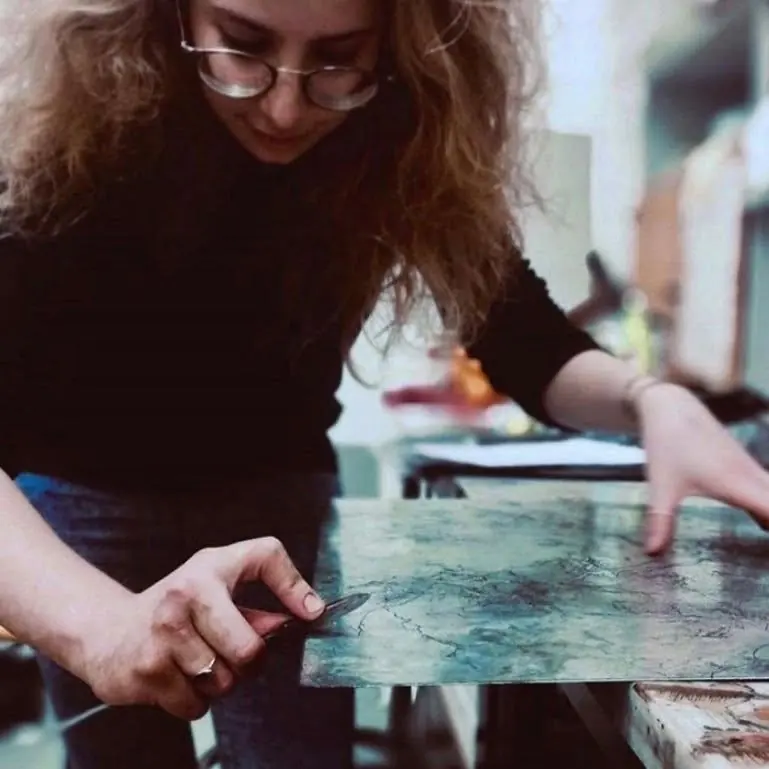
Mordant trays up to 80 × 60 cm, nitric acid and copper sulphate for zinc and copper, the effervescent substances of direct biting. Soft ground and hard ground, rosin for aquatint, needles, burins, burnishers and scrapers. For relief work, gouges and knives on wood and on linoleum.
03
Printing
The pale blue intaglio press, 125 × 72 cm, with adjustable pressure and registration. The printing bench for mixing and grinding inks and for wiping plates, with rollers, spatulas, tarlatan and blankets of different thicknesses. A four-arm screenprinting carousel, screens, a drying rack for the sheets. A 40 × 40 vertical bookbinding press for artist’s books. And the paper store, in a range of weights.
/Techniques
What we print
People come here to print. Intaglio, relief, screenprinting, and every stage that leads to the sheet, cutting the plate included.
01Intaglio
Printing from below the surface. The ink sits in the groove and the paper goes down to fetch it.
The plate is a sheet of zinc or copper. The mark is bitten by the acid where the needle has opened the ground, or cut by the needle itself into bare metal. You ink it, wipe the surface with tarlatan and run it through the press: the pressure pulls the ink out of the groove and leaves it standing on the paper.
It is the technique the workshop was built on, and the one we know best.
The techniques within intaglio
- Etching — the mark bitten by the acid where the needle has opened the ground
- Drypoint — the mark cut straight into the metal, with no mordant
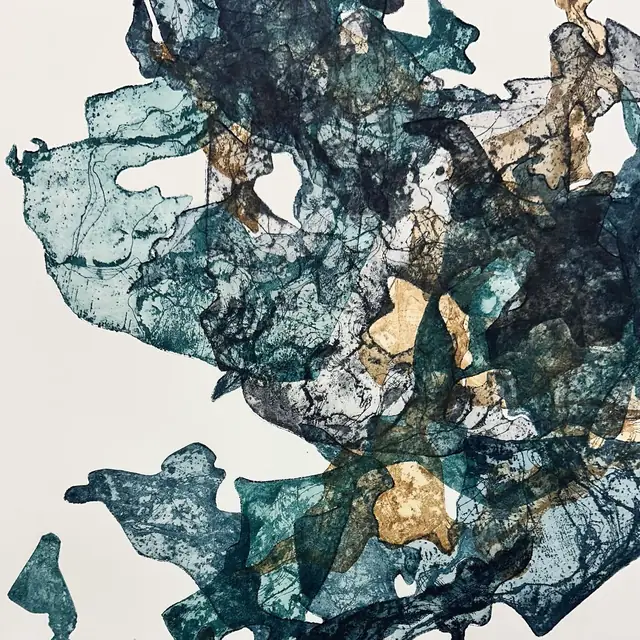
- Aquatint and marbling — tones and flat areas, from the grain of the rosin to the movement of the colour
- Lavis — the mordant brushed on, like a watercolour on the plate
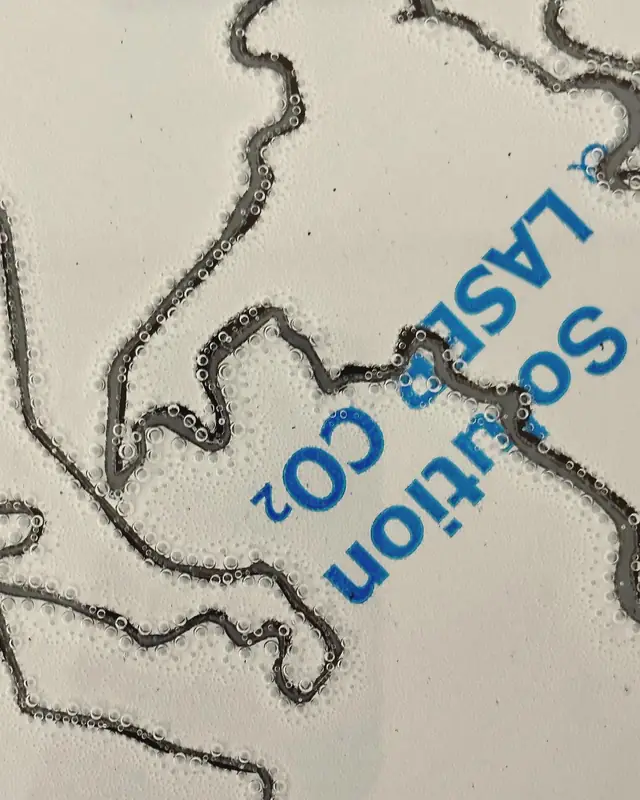
- Direct biting — the acid guided over the open plate, effervescent substances included
- Monotype — the single impression, printed only once
02Woodcut and linocut
Printing in relief. Everything that must stay white is cut away.
The block is wood or linoleum and is worked with a gouge. What stands proud takes the ink; the rest is the white of the sheet. You learn to think the image in reverse, and then there is no going back.
Wood gives the grain and the stamina for longer editions; linoleum is more yielding and allows broad marks and clean cuts. It prints on the press or by hand, with the baren.
03Screenprinting
From designing the screen on the computer to pulling and printing.
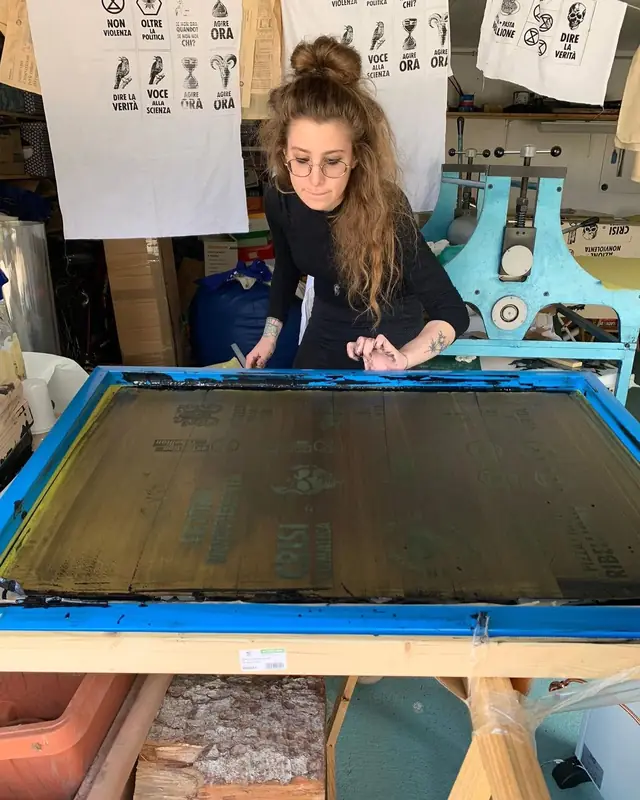
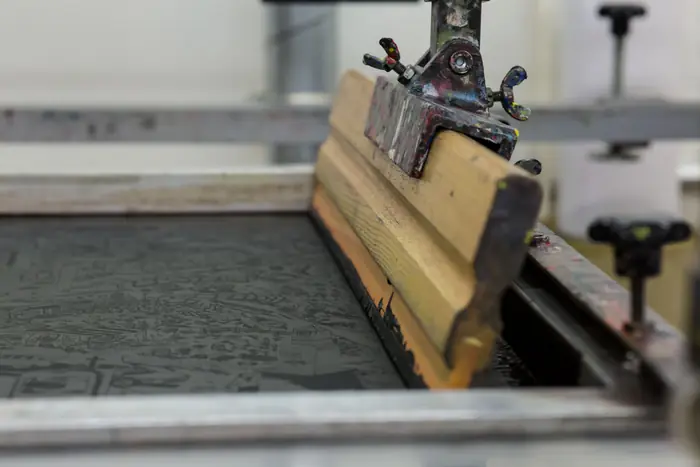
It starts at the computer: the file separates the colours and becomes the film that exposes the screen. Where the emulsion has not hardened the fabric, the ink goes through; the squeegee pushes it across the mesh, one colour at a time.
It holds solid areas of colour and long editions, and joins the file to the hand with nothing in between.
The stages
- Digital design — colour separation and films
- Preparing the screen — emulsion, exposure, developing
- Pulling — the squeegee on the carousel, one colour at a time
- Printing and drying — the rack for the waiting sheets
04Shaped and digital plates
The way of working that runs through all three.
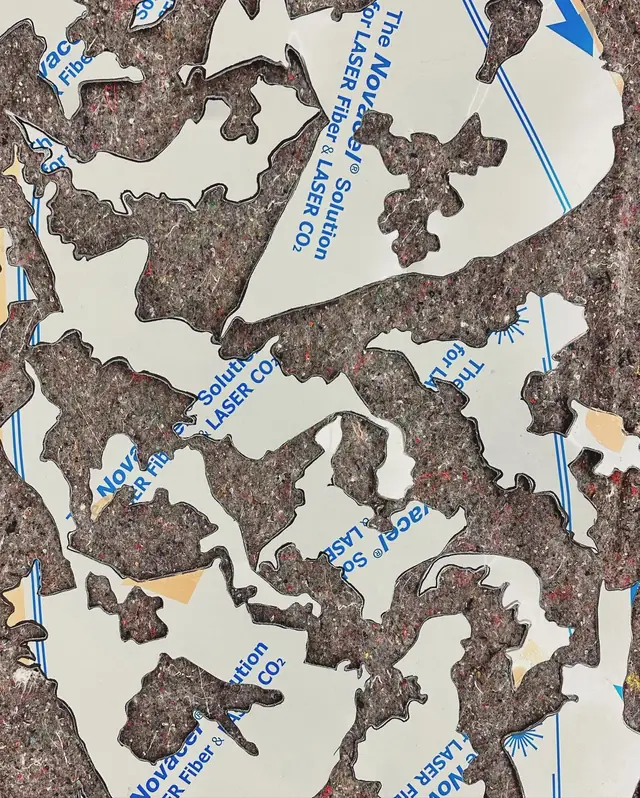
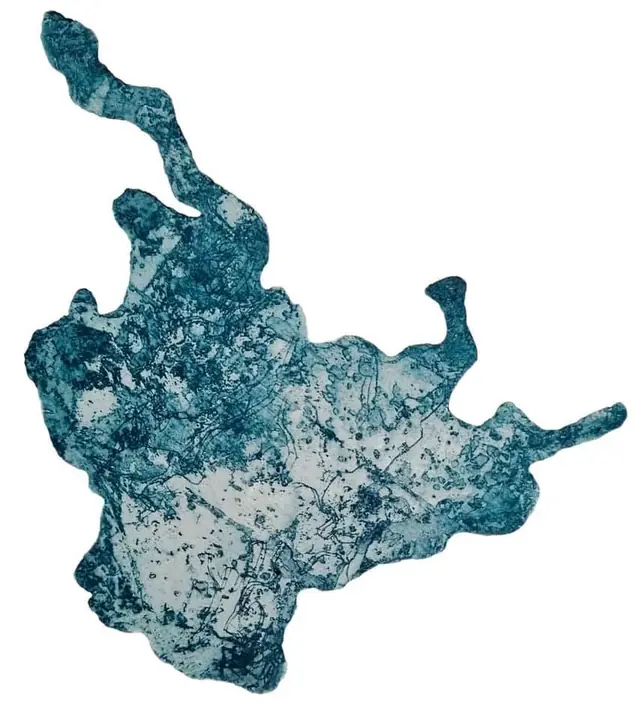
The plate does not stay rectangular. The outline is drawn in vector, transferred onto the plate with a film, and cut. The shape of the plate is already the image, and the white of the sheet around it becomes part of the composition. Several shaped plates, printed one over the other in different colours, build the depth.
Plates and proofs are photographed and digitised, and when a project calls for it they go back on the press.
/The area
Why Rubano
Close to Padua, to its university and its schools. Far enough out to work in peace.
Anyone coming from further afield gets off at Mestrino-Ronchi. From there it is a few minutes, and we sort out the last stretch together: you can reach the workshop without a car.
/The network
Relationships already in place
Academies, print studios, associations. These are the people and places we have worked with for years, and where most of those who pass through the workshop come from.
/Development
Where it’s heading
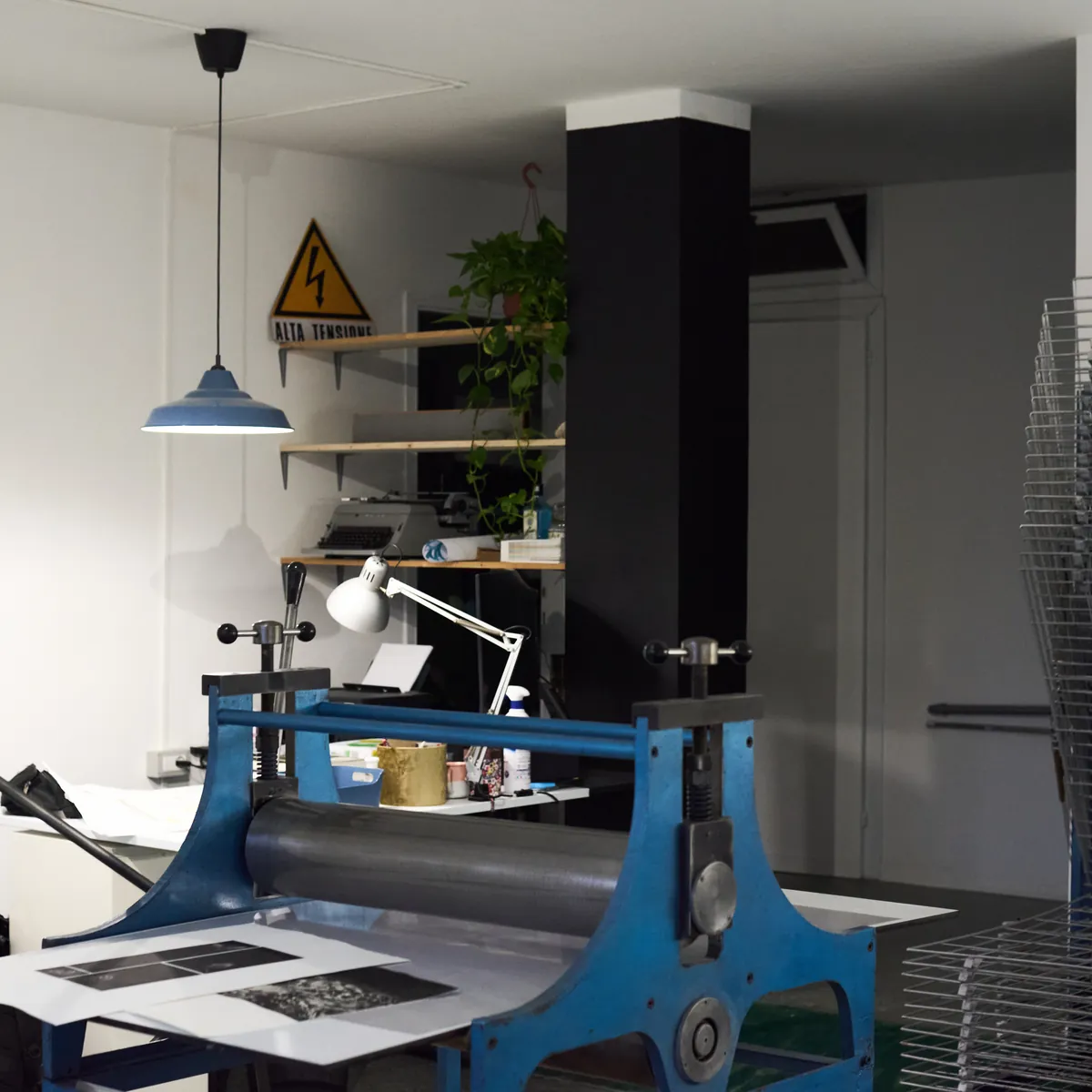
Now
The workshop
Printing, days in the workshop by appointment, project sessions with artists. You try, you get it wrong, you print again: the workshop is made for experimenting.
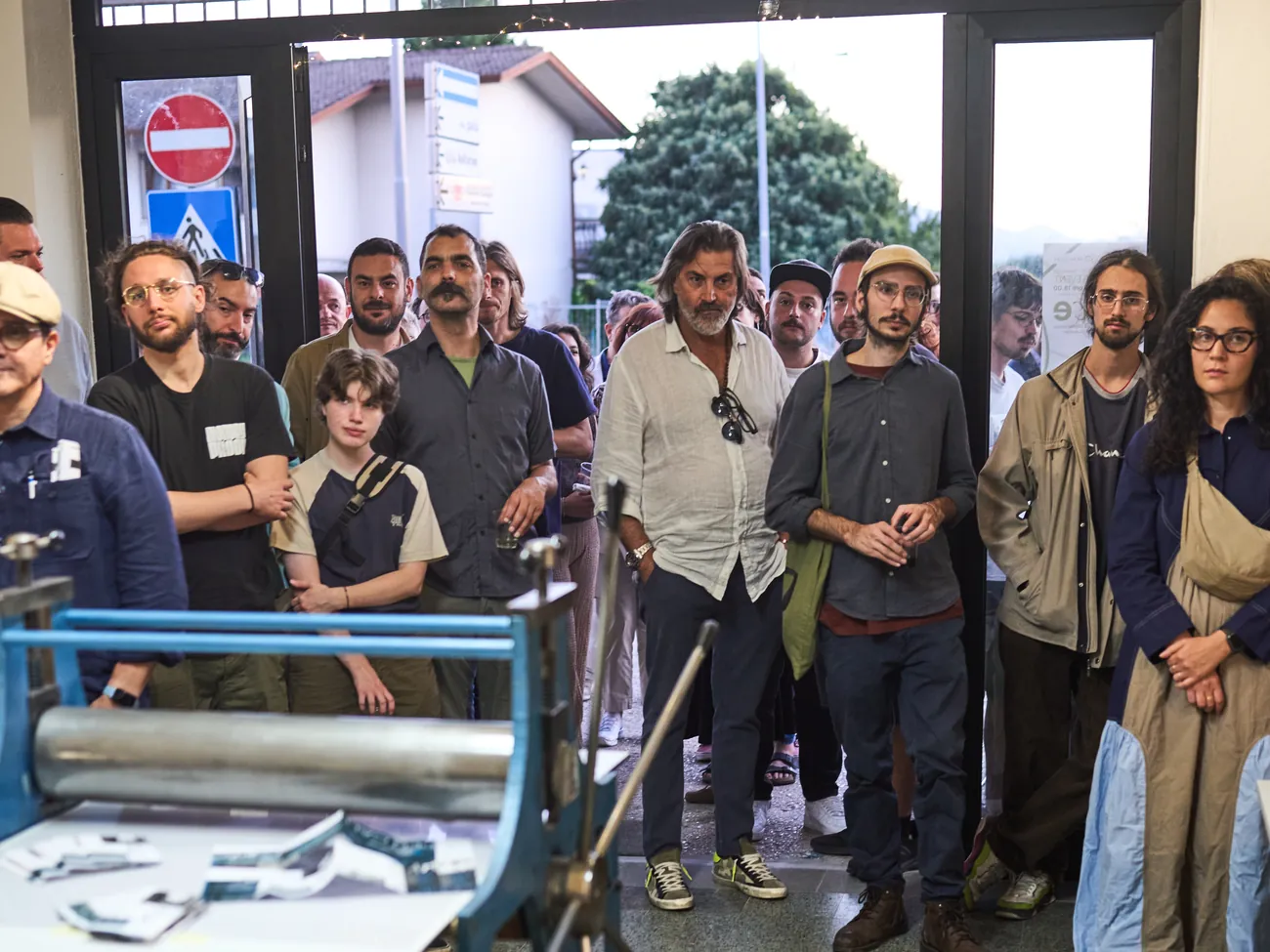
Starting
The programme
Workshops for beginners, new exhibitions, open calls, round tables with curators, designers and architects, the first residencies. «Tracce» was the first public event.
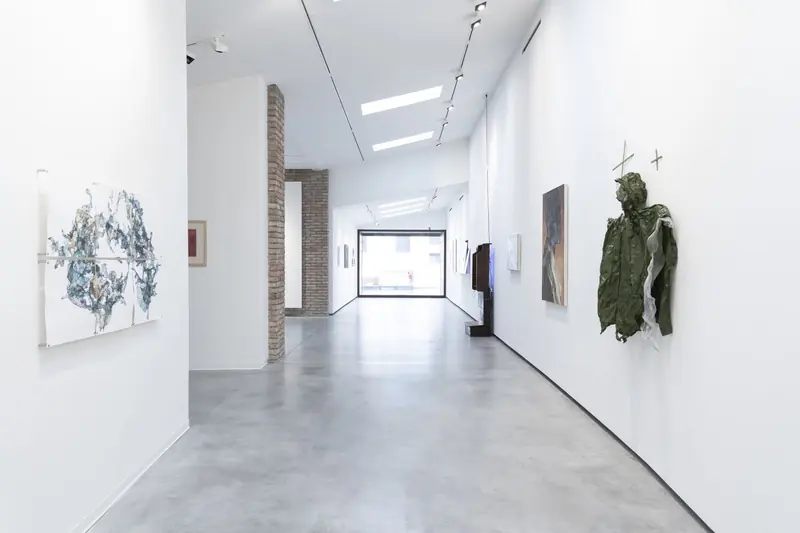
Then
Exhibition and publishing
A space to exhibit, the first publications, a home that holds research, production and circulation together.